
Passive Fire Protection: Saving Lives Before the Alarm Sounds
When a fire breaks out, most people think of alarms, sprinklers and emergency exits as the primary lifesavers. Those systems matter enormously, but by the time an alarm sounds, passive fire protection has already been working silently in the background, buying the seconds and minutes that make evacuation possible.
What Passive Fire Protection Actually Does
Unlike active systems that switch on in response to fire, passive fire protection is built into the fabric of a building. It doesn’t need a trigger. Compartmentation, fire doors, intumescent seals and fire-stopping measures are all designed to contain fire and smoke at the source, slowing their spread and preserving escape routes before anyone has even reached for a phone.
The principle is straightforward: a building divided into fire-resistant compartments forces a fire to work harder to travel. That resistance is measured in minutes and in an emergency, minutes are everything.
The Hidden Threat: Smoke
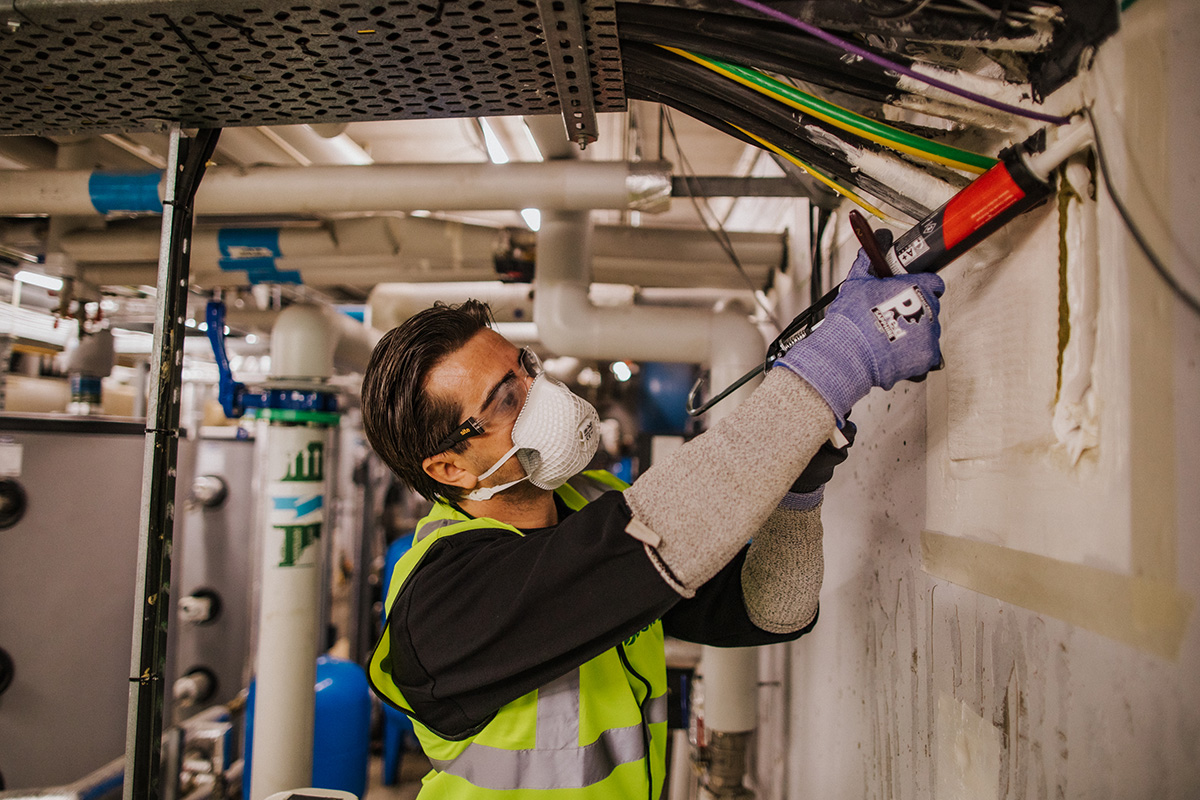
Fire itself is dangerous, but smoke is responsible for the majority of fire-related fatalities in the UK. Smoke travels faster than flames, moves through the smallest gaps and can render a corridor impassable within moments. Penetration seals around pipework, cables and ductwork (which are often overlooked during construction or refurbishment) are a critical line of defence. Without them, a fire in one part of a building can push toxic smoke into areas far removed from the source. This is precisely why fire stopping is not a box-ticking exercise. Every unsealed penetration is a potential corridor for smoke.
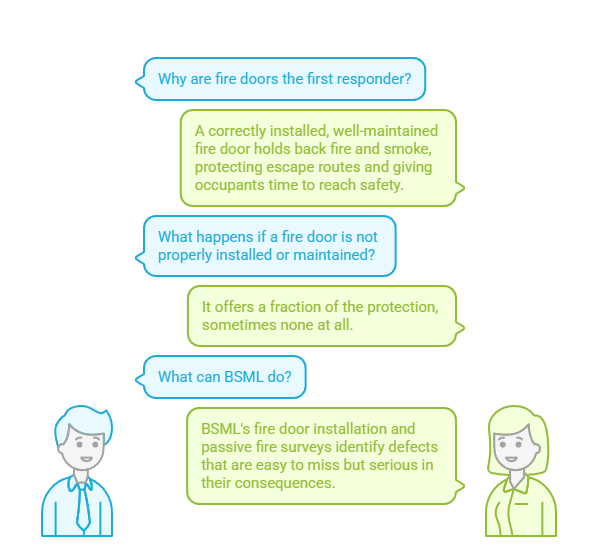
Why Fire Doors are The First Responder
A correctly installed, well-maintained fire door is one of the most effective pieces of passive fire protection in any building. It holds back both fire and smoke, protecting means of escape and giving occupants time to reach safety. A door that is warped, poorly fitted or missing its intumescent strip offers a fraction of that protection — sometimes none at all.
At BSML, our fire door installation and passive fire surveys identify any defects that are easy to miss but serious in their consequences.
What BSML Covers
As a FIRAS Accredited passive fire protection specialist, BSML delivers the full range of measures that keep buildings compliant and people safe:
- Fire stopping and penetration sealing around cables, pipes and ductwork
- Fire door installation and maintenance
- Intumescent and acoustic seal installation
- Passive fire protection surveys and remedial works
- Compartmentation assessments across residential, commercial and mixed-use buildings
Compliance is The Floor, not The Ceiling
Meeting Building Regulations is a legal requirement, but the buildings with the strongest safety records go further. Regular passive fire protection surveys catch degradation, unapproved alterations and installation errors before they can become critical.
BSML works with building owners, facilities managers and contractors across the UK to ensure that passive fire protection performs exactly as it should — quietly, reliably and without fail. Get in touch to talk about passive fire protection today.
The information provided in this article is for general guidance only and is not legal or professional advice.